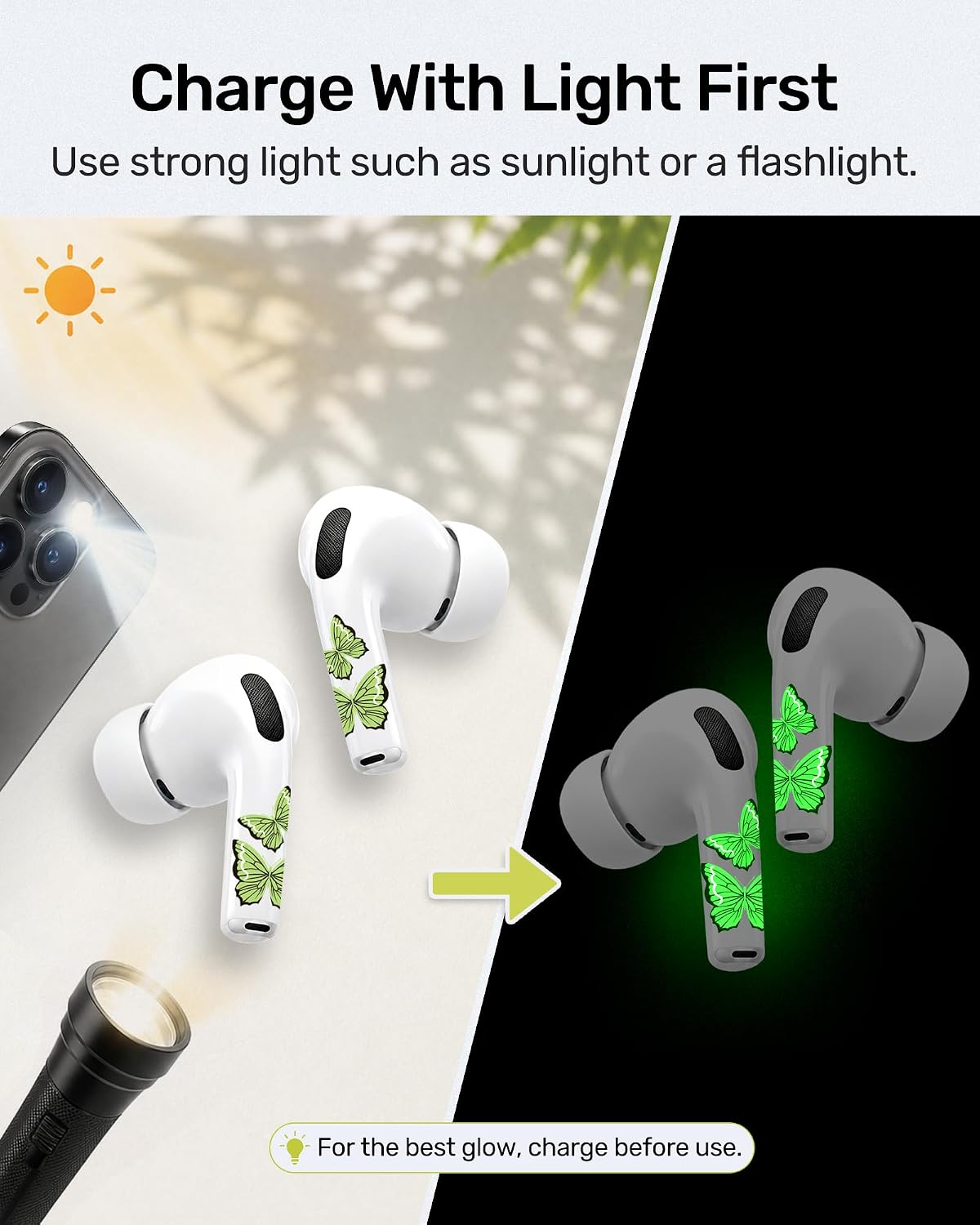
If you’ve ever dumped your AirPods on a gym locker bench and watched someone else scoop them up by mistake — or dug through a bag wondering which case belongs to you versus a roommate — you already understand the problem this article is about. AirPods (Apple’s wireless earbuds) and their charging cases are, by design, nearly identical to every other pair on the market. A skin wrap is a thin, self-adhesive vinyl film — think of it like a sticker engineered to the exact shape of your device — that you press onto the surface to add color, texture, or pattern without adding meaningful bulk. Most people discover them for the aesthetics. But for earbud-specific wraps, the identification angle turns out to be the more durable reason to buy. This guide breaks down which materials actually grip curved earbud surfaces for months (not days), and gives you the decision framework to choose the right wrap for your use case.
The Identification Problem Is Real, and Wraps Solve It Better Than Cases
Let’s be precise about the failure mode cases don’t address: a bulkier silicone case makes your case distinctive, but the moment you pop a bud into your ear, you’re holding a small, smooth, white oval that looks like every other AirPod in every other ear on the subway. In gym settings, open-plan offices, shared dorm rooms, and family households, this matters.
Per PCMag’s roundup of AirPods accessories, accessory makers increasingly segment their product lines between “protection” (cases) and “identification + protection” (skins), recognizing these as genuinely different needs. Skins stay on the bud itself. Your left bud with a matte red wrap is visually yours in a pile of ten identical-looking buds.
There’s a secondary angle worth naming: ownership marking for warranty and repair claims. If you send a bud in for service or exchange it at an Apple Store, a distinctive wrap removed cleanly on arrival is better than a marker scrawl. The skin doesn’t survive the service process, but it gets you there unambiguously. CNET’s AirPods Pro 2 review notes that Apple’s exchange process often swaps units rather than repairing them — so walking in with a clearly marked device at least confirms what you handed over.
The Geometry Challenge Most Buyers Underestimate
AirPods and their cases are not flat rectangles. The case lid has a slight dome. The bud housing has compound curves (two directions of curve intersecting at once). The stem on standard AirPods tapers. These shapes make vinyl conformability — the material’s ability to stretch and follow curves without lifting at edges — the dominant spec, more important than thickness or finish type.
By the numbers:
- AirPods Pro 2 case dimensions: ~45.2mm × 60.6mm × 21.7mm (per Rtings.com specs)
- Average skin panel count for a full AirPods Pro wrap kit: 6–8 pieces (case front, case back, lid top, lid inside, left bud, right bud)
- Adhesive reactivation temperature for most cast-vinyl wraps: 130–160°F — relevant because pockets and summer heat can reach this range
The case is manageable. The buds themselves are the hard part. Panels smaller than a postage stamp need to wrap around a curved housing, survive in-ear canal pressure cycles, and grip through sweat exposure without leaving residue on the silicone tip area. Not every material does this.
Material Breakdown: What Actually Grips Small, Curved Surfaces
Cast Vinyl vs. Calendered Vinyl (the spec that decides longevity)
This is the tradeoff that determines whether your wrap is peeling at week three or still crisp at month fourteen.
Calendered vinyl (pronounced like the wall calendar — it’s a production method where vinyl is pressed flat through rollers) is the base material behind most budget phone skins in the $8–$12 range. It’s stiffer and has a “memory” — meaning it wants to return to its flat shape. On a flat phone back, this is fine. On the compound curve of an AirPods case lid or a bud housing, that memory creates edge lift. You’ll feel it before you see it: a slight catch when you run your thumbnail across the seam.
Cast vinyl is produced by pouring liquid vinyl onto a flat surface and curing it slowly. The resulting film has no directional memory — it conforms to three-dimensional surfaces more aggressively and holds that shape under heat and humidity cycles. Brands citing Avery Dennison SW900 series or 3M 1080 series materials are referencing cast vinyl product lines. Both Avery Dennison’s product specification sheets and 3M’s vinyl films technical documentation confirm that cast films carry conformability ratings for surfaces with radii as tight as 0.5 inches — relevant for bud housings.
For AirPods specifically, the material recommendation is clear: cast vinyl for the buds, where calendered vinyl will disappoint; either material is acceptable for the case if panels are laid on flat or near-flat surfaces.
Finish Options and the Sweat Equation
Finish types that reviewers consistently flag as problematic for earbud wraps:
- Gloss finishes show fingerprints, ear oils, and sweat residue more aggressively than any other finish on a surface you’re handling this frequently. Owners in long-run forum discussions (sourced from community aggregations, not individual posts) consistently report gloss wraps on earbuds looking “grimy” within two weeks without dedicated wiping.
- Leather-texture wraps are visually striking but add grip that traps debris around the seam edge and is harder to wipe clean on a curved surface.
Finish types that perform well:
- Matte finishes (true matte, not satin) suppress fingerprints and are the most forgiving of handling frequency. Wired’s earbud care guide notes that matte surfaces on earbuds resist the buildup of ear-adjacent oils more visibly than gloss alternatives.
- Brushed aluminum texture sits in the middle — it has more visual depth than matte but handles oils better than gloss because the texture pattern optically breaks up fingerprint smears.
- Textured carbon fiber wraps (woven pattern, not flat carbon-look) create micro-ridges that can actually trap debris in gym environments but offer better grip on the bud if you handle your earbuds without a case regularly.
Brand Comparison: Who Actually Makes AirPods-Specific Kits That Hold
The market has three real tiers here, and the decision isn’t just about price — it’s about precision of cut.
Mass-market precision brands (Dbrand, Skinit): Both offer AirPods-specific kits with multi-panel layouts that account for the case lip geometry. The Verge’s accessories roundup has noted Dbrand’s laser-cut tolerances as consistently among the tightest in the industry for small-form devices, with their AirPods kits receiving particular mention for edge alignment. Skinit competes on customization breadth — upload-your-own artwork options are more accessible here — though owners report slightly less tight tolerances on compound curves than Dbrand’s catalogue pieces.
Boutique and Etsy studio wraps ($40–$100+ range): This is where the commissioned artwork angle becomes real. Several studios offer hand-trimmed cast vinyl wraps with artist illustrations, colorway coordination across phone + buds + case, and limited-edition series. The tradeoff: precision is operator-dependent. A skilled boutique cutter can match or exceed mass-brand accuracy; a less experienced one won’t. Vet by asking specifically whether they use cast or calendered vinyl and whether the bud panels are pre-cut or hand-trimmed.
Budget generic kits ($8–$15): Calendered vinyl almost universally. Acceptable for the case, where flat-panel application is achievable. On the buds themselves, the pattern in aggregated buyer reviews is consistent: edge lift within two to six weeks on the curved bud housing, accelerated by any sweat exposure. If identification is the goal, these work on the case — where visibility is higher anyway — and the price-to-outcome ratio is defensible there.
The math check: A Dbrand AirPods Pro kit runs approximately $19–$24 as of early 2026 (pricing verified against their published site; subject to change). A boutique commission with custom artwork runs $45–$85+ depending on studio. Generic kits: $8–$12. If you’re replacing a budget wrap every two months versus a precision wrap lasting 12–18 months, the cost-per-month math favors the mid-tier option for users who care about longevity.
Application and Removal: The Variables That Determine Whether You Get Your Money’s Worth
Application on Curved Surfaces
The single biggest application mistake on AirPods wraps — across every review, forum aggregation, and brand instruction set reviewed in preparing this piece — is skipping the heat step on curved panels. A heat gun or hair dryer on low, applied two to three seconds before pressing a panel over a curved surface, temporarily softens the vinyl’s cast memory and dramatically improves the initial conform. The Verge and PCMag both note this in their accessory application guidance for small-device skins: heat is not optional on compound curves, it’s the step that separates clean installs from ones that peel within days.
On the buds specifically: the stem panel on standard AirPods is the hardest panel in any kit. Apply from the flat end of the stem toward the housing, use a fingertip (not a squeegee — too much surface area) to work around the taper, and finish with heat. Accept that this panel will take three attempts before it’s right.
Removal Without Residue
Cast vinyl, when removed slowly and warmed before pulling, should leave no adhesive residue on AirPods’ smooth plastic housing. Wired’s earbud care guide recommends isopropyl alcohol (70%) on a cotton swab for any residue cleanup — this is safe for AirPods housing material but should be kept away from the silicone ear tips, where alcohol can degrade the material over repeated exposure.
Calendered vinyl removed cold or quickly can leave residue and, on older or scratched housing surfaces, may pull off any loose surface texture. The removal risk is low on new AirPods with factory-fresh housing, higher on units with micro-scratches from previous use.
The Decision Rule
Here’s the clean frame for where you are right now:
- If identification is the primary goal and budget is the constraint: Buy a budget kit, apply only to the case (where flat panels are feasible), and accept a replacement cycle. Total annual spend: $15–$25.
- If you want wraps that survive 12+ months on the buds themselves: Cast vinyl from a precision brand or boutique cutter is the only durable path. Matte or brushed finish over gloss. Budget $20–$45 depending on whether you need custom artwork.
- If you’re coordinating across a device ecosystem (phone + buds + case as a colorway set): Prioritize brands that offer matching finish kits across device lines — Dbrand’s colour/texture system is currently the most consistent for cross-device coordination. The per-device cost scales down when you’re buying three or four panels at once.
- If you’re in a gym or high-sweat environment: Matte cast vinyl only. Remove and re-clean the contact surface every three months. Budget for one replacement cycle per year regardless of brand.
The wrap that stays on is the one matched to the surface geometry, applied with heat, and made from a material that doesn’t remember being flat. Everything else is just picking the finish you’ll actually enjoy looking at — which, at the end of a good decision, is the fun part.