If you’ve ever watched someone peel a giant sheet of colored film off a car door and thought “I could do that” — you’re already thinking about automotive vinyl wrapping. Vinyl wrap is a thin, pressure-sensitive film (usually 3–4 mils thick, or roughly the width of three human hairs) that gets stretched over a vehicle’s painted surface to change its color or finish without touching the original paint underneath. Done right, it protects the factory paint, can be removed cleanly after a few years, and costs a fraction of a respray. Done wrong, it bubbles, lifts at the edges, and turns your weekend project into an expensive redo. This guide covers the three brands that dominate the mid-to-pro wrap market — 3M, Avery Dennison, and VViViD — comparing what their materials actually do, where each one earns its price tag, and where it cuts corners. By the end, you’ll have a clear framework for picking the right film for your specific job.
| EDITOR'S PICK3M 2080 G12 Gloss Black 5ft x 3… | Mid-tier3M 1080 M12 MATTE BLACK 5ft x 1… | Budget pick[VViViD Matte Black Vinyl Wrap A](https://www.amazon.com/dp/B07PYK74SG?tag=greenflower20-20)… | |
|---|---|---|---|
| Film series | 2080 | 1080 | — |
| Finish | Gloss | Matte | Matte |
| Size (length x width) | 5ft x 3ft | 5ft x 1ft | 60in x 6in |
| Coverage area | 15 sq ft | 5 sq ft | — |
| Price | $44.99 | $17.03 | |
| See on Amazon → | See on Amazon → | See on Amazon → |
Brand Positioning: What You’re Actually Buying
Before diving into chemistry, it helps to understand the tier each brand is playing in, because price differences between them aren’t random — they reflect real differences in engineering spec and manufacturing tolerance.
3M Wrap Film Series 1080
3M’s Wrap Film Series 1080 is the benchmark most professional installers cite when they talk about a “pro-grade” film. It is a cast vinyl rated by 3M at up to seven years of outdoor durability when properly installed and maintained, per the 3M Automotive Division Wrap Film Series 1080 Product Data Sheet. The film runs roughly $12–$18 per linear foot at distributor pricing as of mid-2026, depending on finish variant. Its consistency batch-to-batch is a primary reason shops with high-volume throughput stay loyal to it.
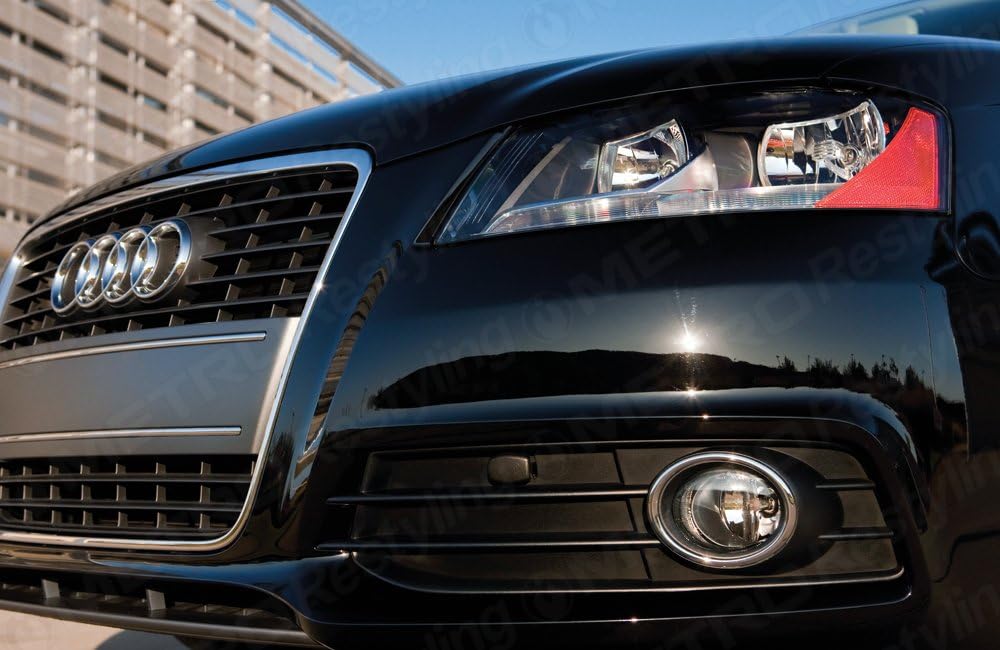
3M
$44.99
In stock on Amazon
Check price on AmazonAvery Dennison Supreme Wrapping Film SW900
Avery Dennison’s Supreme Wrapping Film SW900 series is 3M’s most direct competitor at the pro tier, and depending on the finish, many installers give it the edge in conformability — meaning how easily it stretches around compound curves and tight body lines without tearing or going opaque. The SW900 Technical Data Sheet, published by Avery Dennison Graphics Solutions, rates the film at five to seven years of outdoor durability, comparable to 3M. Street pricing is similar: roughly $11–$17 per linear foot. Where Avery earns consistent praise is its finish catalog — the metallic and satin variants in the SW900 line have a depth that aggregated installer reviews describe as noticeably richer than 3M’s equivalent colorways.
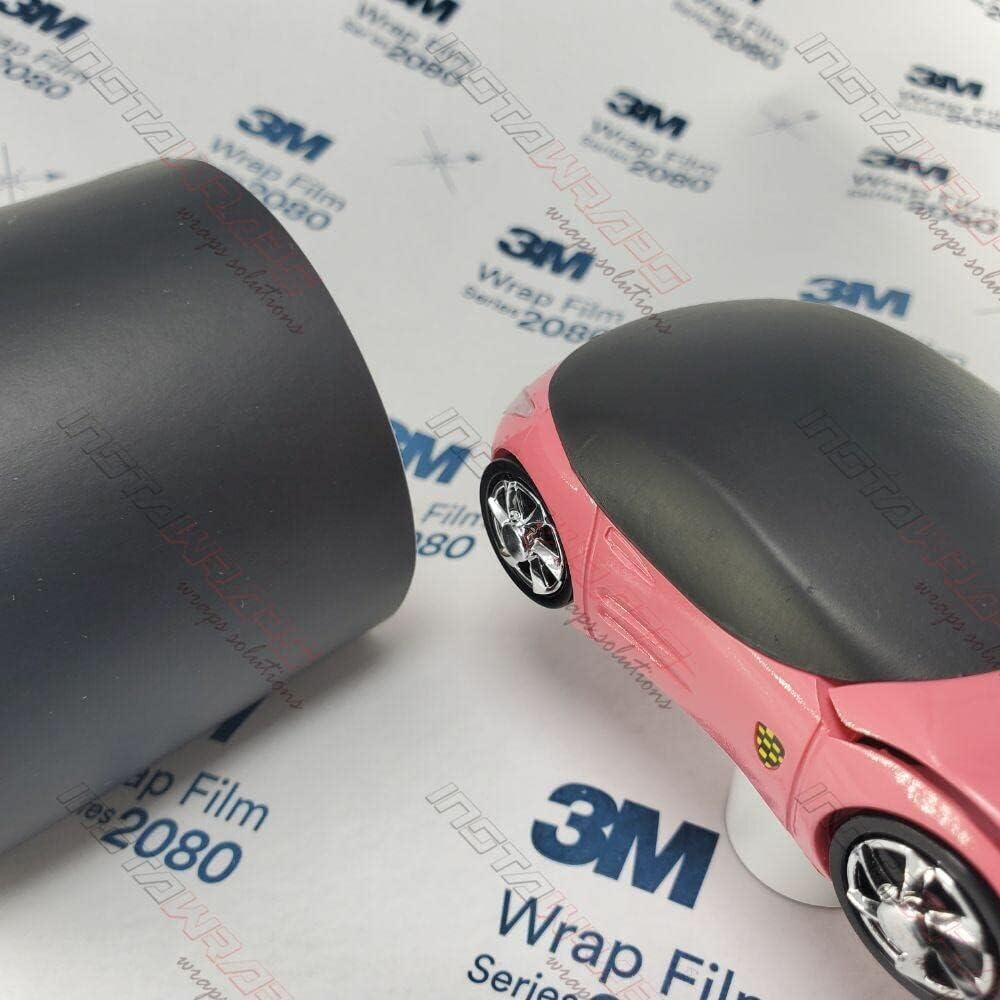
3M
$17.03
In stock on Amazon
Check price on AmazonVViViD XPO and Air-Tack Series
VViViD occupies a genuinely different lane. Its XPO and Air-Tack series films are calendered vinyl sold primarily through retail channels at $4–$8 per linear foot, roughly 40–60% less than the pro-tier films. VViViD’s own product specification documentation for the XPO and Air-Tack series markets these films at three to five years of outdoor durability under normal conditions. For hobbyists doing a single panel, an accent roof, or a smaller surface area, VViViD is the on-ramp. For a full-vehicle wrap where labor time alone justifies a better substrate, the calculus shifts.
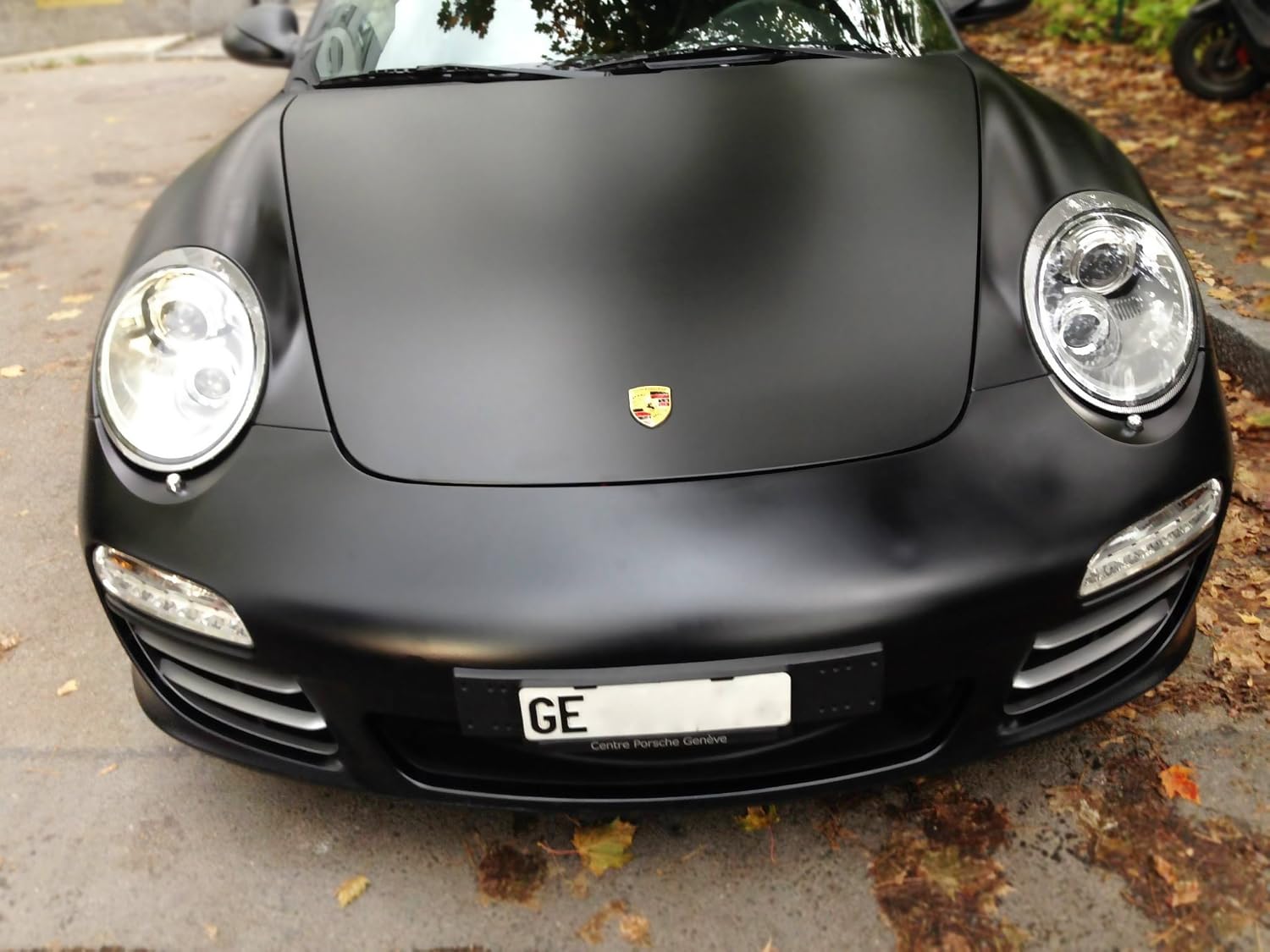
VViViD
In stock on Amazon
Check price on AmazonCast vs. Calendered Vinyl: The Difference That Drives Every Other Decision
This is the single most important material-science concept in wrap film selection, and it’s worth slowing down for.
Cast vinyl is made by pouring liquid PVC compound onto a casting sheet and letting it cure slowly. The result is a film with a “relaxed” molecular memory — it does not want to spring back to its original shape after being stretched. That is critical when you are conforming film around door handles, wheel arches, or bumper fascias. 3M 1080 and Avery SW900 are both cast films.
Calendered vinyl is made by running PVC compound through heavy rollers under heat and pressure, which stretches the molecules in a direction. The film is thicker, stiffer, and has built-in memory — meaning it wants to creep back toward its rolled shape over time, especially in heat. VViViD’s XPO line uses a higher-grade calendered construction that the brand positions as near cast-quality, and long-run owner reports suggest it performs better than entry-level calendered films, but across aggregated installer reviews, the pattern is consistent: cast films outlast and out-conform calendered films on complex body panels.
By the numbers:
| Film | Type | Rated Outdoor Durability | Thickness | Approx. Retail/Linear Ft |
|---|---|---|---|---|
| 3M 1080 | Cast | Up to 7 years | 3.2 mil | $12–$18 |
| Avery SW900 | Cast | 5–7 years | 3.5 mil | $11–$17 |
| VViViD XPO | Calendered (premium) | 3–5 years | 4.0 mil | $4–$8 |
Specs per manufacturer data sheets cited in plain text above; retail pricing reflects mid-2026 distributor and online channel averages.
Adhesive Chemistry: Why Bubbles Happen and How Film Brands Try to Prevent Them
Every wrap film uses a pressure-sensitive adhesive (PSA) — a layer of sticky compound that bonds when you apply pressure, without needing heat or solvent to activate. But not all PSAs behave the same way, and this is where application experience diverges significantly between brands.
3M Comply v3 Adhesive
3M 1080 uses a Comply v3 adhesive, which incorporates a micro-channel system — tiny ridges in the adhesive layer that let air escape as you squeegee the film down. Per the 3M Automotive Division Wrap Film Series 1080 Product Data Sheet, this dramatically reduces the trapped-air bubbles that plague beginners. Owners and professional installers consistently report that 1080 is among the most forgiving films to apply because of this channel system — mistakes are catchable during installation rather than discovered three days later.
3M
$44.99
In stock on Amazon
Check price on AmazonAvery Dennison EZ Apply Adhesive
Avery SW900’s EZ Apply adhesive uses a similar air-release channel technology, and in side-by-side installer reports, it is rated comparably to Comply v3 for bubble resistance. Where Avery’s adhesive gets specifically called out is in repositionability: the SW900 allows slightly longer working time before the adhesive reaches full bond strength, which long-run installers note gives an edge when working solo on large panels like hoods or roofs. The Avery Dennison Graphics Solutions SW900 Technical Data Sheet details the EZ Apply channel geometry and bond-strength progression.
3M
$17.03
In stock on Amazon
Check price on AmazonVViViD Air-Tack Adhesive
VViViD’s Air-Tack adhesive also features an air-release channel design, which is genuinely impressive for the price point. The practical gap shows up at the edges: across installer community feedback, VViViD films are reported to lift at cut edges more frequently than 3M or Avery, especially on vehicles that see temperature extremes. VViViD’s product specification documentation for the Air-Tack series recommends heat-gun edge sealing and overlapping film or primer at termination points — an extra step that pro-tier films handle more cleanly on their own.
One underappreciated adhesive variable is plasticizer migration. PVC films contain plasticizers — chemical additives that keep the vinyl flexible. Over years of outdoor exposure, plasticizers can migrate toward the adhesive layer, softening it and causing the film to loosen. Both 3M and Avery use stabilized adhesive formulations engineered to resist this migration. VViViD’s lower price point reflects a less developed adhesive package, and multi-year outdoor durability claims for calendered films should be understood in that context.
VViViD
In stock on Amazon
Check price on AmazonFinish Durability: The Honest Picture on Matte, Gloss, and Metallic
Finish durability — how well a wrap holds its color, texture, and sheen over time — is driven by the film’s topcoat, its UV stabilizer package, and the base material. Here is how the three brands compare across the finishes that matter most.
Gloss finishes: All three brands perform well here. Gloss is the most UV-stable finish category because the clear coat layer is thick and continuous. MotorTrend, in its feature article “How Long Does a Vinyl Wrap Last?”, notes that gloss wraps routinely hit the high end of their rated durability windows when properly maintained, across brands at every price tier.
Matte and satin finishes: This is where material quality separates. Matte finishes get their texture from a microscopically rough topcoat surface that scatters light. That surface is vulnerable to contact contamination — oils from hands, automatic car-wash brushes, and certain waxes fill in the micro-texture and create permanent glossy patches. 3M 1080 matte variants are covered by specific maintenance documentation for this reason. Avery SW900 matte is equally well-regarded; owners frequently cite its color depth in deep blacks and dark grays as a purchase differentiator. VViViD matte films are reported by owners to show contact gloss more quickly, partly because the topcoat is thinner, and the recovery window — where you can clean contamination without permanent marking — appears narrower based on long-run user feedback.
Metallic and chrome-adjacent finishes: Car and Driver, in its explainer “Vinyl Wrap vs. Paint: What’s Worth It?”, observes that chrome and brushed-metal finishes are the most installation-skill-dependent category — they reveal every wrinkle, finger smudge, and stretch mark because the specular reflection makes imperfections visible from across a parking lot. Avery’s metallic catalog is the most consistently praised at the pro tier, particularly the brushed series. 3M’s chrome-adjacent finishes are technically comparable, but installers note that 3M’s chrome film is stiffer and less forgiving on compound curves. VViViD’s metallic offerings are popular for accent panels and interior trim where conformability demands are lower, but they are generally not recommended for hood or roof pulls on complex body lines.
DIY Application Reality: What Aggregate Experience Actually Looks Like
The marketing photography makes wrap look like unrolling wrapping paper. Installer communities suggest something closer to “a hobby that rewards prep obsession and punishes impatience.”
A few consistent patterns from aggregated DIY installer experience, across brand-specific communities:
-
Surface prep is 80% of the result, regardless of brand. Isopropyl alcohol wipe-down, clay bar treatment on paint with embedded contamination, and temperature control — film applies most cleanly between 60°F and 80°F ambient, per 3M installation guidance — affect outcome more than brand choice for a skilled installer. VViViD’s lower price does not save you if the surface has wax residue on it.
-
Knifeless tape versus freehand cutting is the technique split that separates clean installs from ragged ones. Both 3M and Avery sell brand-matched knifeless cutting tape; VViViD installations frequently use generic knifeless tape effectively at lower cost.
-
Heat gun technique is non-negotiable for 3D surfaces. Cast films stretch more predictably under moderate heat (around 140–160°F per 3M Wrap Film Series 1080 installation documentation). Both 3M and Avery perform more predictably under heat stretch than VViViD XPO, which can thin unevenly at the same temperatures due to its calendered construction.
-
Post-install heat curing — going over the wrapped surface with a heat gun after installation — activates the adhesive more fully and is specifically recommended in both the 3M Automotive Division and Avery Dennison Graphics Solutions installation documentation. Skipping this step is the most commonly cited cause of early edge lift across installer communities.
The Decision Framework
If you are mid-decision, here is a clean if/then map:
If you are wrapping a full vehicle and the labor cost alone exceeds $500, the $4–6 per linear foot premium for 3M 1080 or Avery SW900 over VViViD is straightforward arithmetic. Do not undersell the substrate.
If you are doing accent panels, interior trim, or your first partial-panel learning project, VViViD XPO is a legitimate choice. The material is workable, the price enables practice runs, and the durability is adequate for lower-UV-exposure surfaces and shorter ownership horizons.
If finish depth in metallics and satins is the primary purchase driver, Avery SW900 is the pick. Installers and reviewers consistently rank its metallic and dark satin colorways above 3M’s in visual quality.
If batch-to-batch color consistency matters — meaning you are wrapping fleet vehicles or multiple cars to match — 3M’s manufacturing tolerance documentation and distributor network make it easier to re-order matched film. Avery is comparable; VViViD has more color variance reported across batches.
If you are installing in a garage without climate control, cast vinyl’s temperature tolerance and repositionability window give you more margin for error. In hot or cold extremes, the adhesive gap between cast and calendered films is the most consequential variable on the driveway.
The wrap film market in mid-2026 has genuinely good options at every tier. The mistake is not picking the “wrong brand” — it is picking a brand calibrated for a different job than the one in front of you.