If you’ve ever peeled a cheap phone skin off after three months and found a sticky, ghost-gray residue baked into your device’s finish, you already understand why adhesive chemistry matters. A phone skin — for anyone new here — is a thin vinyl sticker cut precisely to fit your phone’s body. It protects the surface from micro-scratches, adds grip, and lets you change the look without a bulky case. Carbon fiber skins are one of the most popular finishes: they mimic the woven, textured appearance of real carbon fiber composite material (the stiff, lightweight stuff used in sports cars and aerospace parts) but at a fraction of the cost. The problem is that “carbon fiber” on a product listing tells you almost nothing about how the skin is actually made, what adhesive holds it down, or how long either will survive in a pocket with keys. This guide cuts through the noise. We pored through brand spec sheets, aggregated owner reviews, and material-science documentation so you can make a confident decision before you spend anywhere from $10 to $150 on a wrap.
What “Carbon Fiber” Actually Means on a Phone Skin (And Why It Varies So Much)
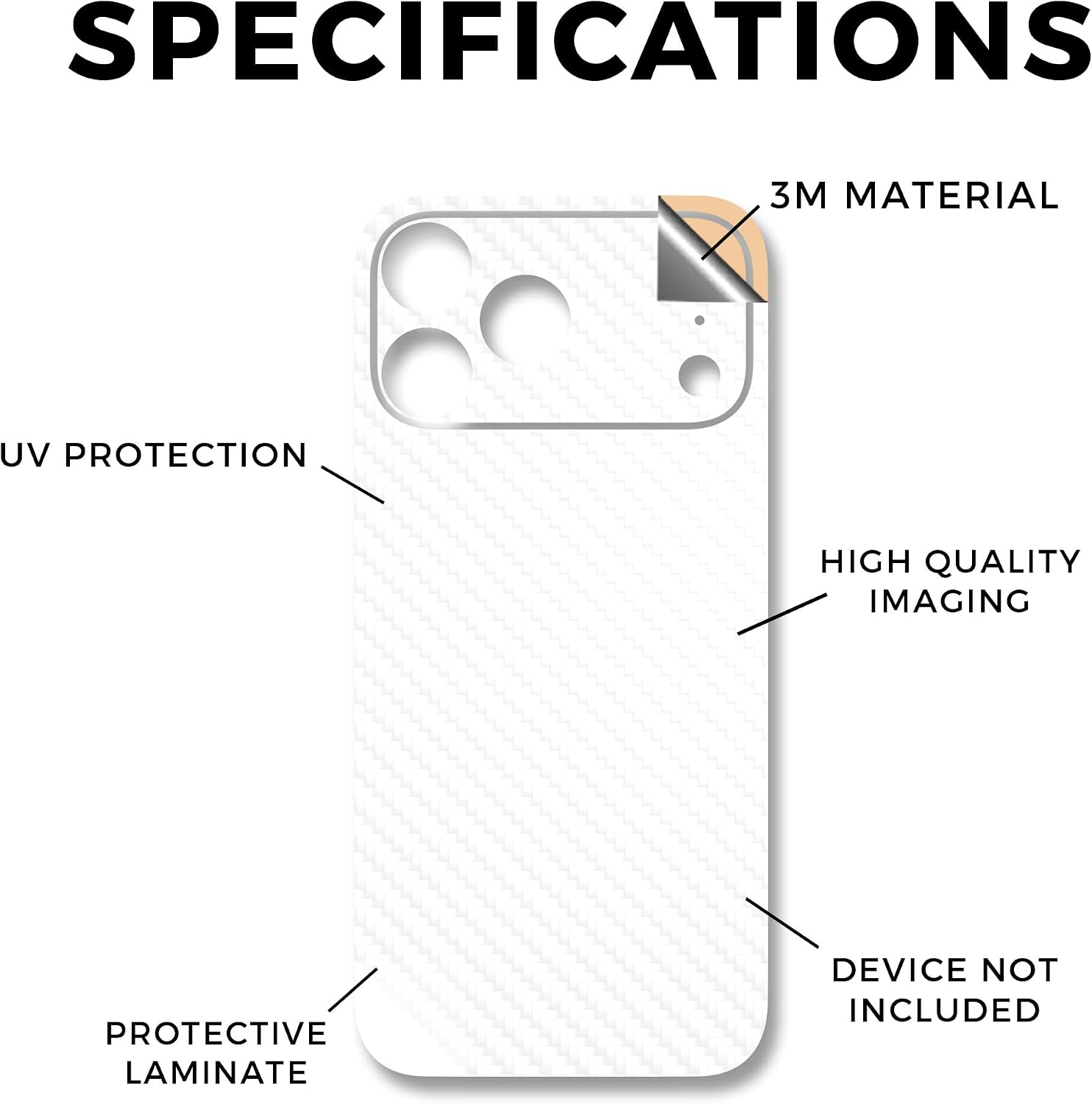
Here’s the terminology trap that catches even experienced buyers: the phrase carbon fiber skin refers to a printed or textured vinyl film, not actual woven carbon fiber. Real carbon fiber composite is rigid and would never conform to the curved edges of a modern phone. What you’re buying is always a multi-layer vinyl stack — typically a face film (the top layer you see and touch), a pressure-sensitive adhesive (PSA) layer underneath, and sometimes a thin liner or laminate over the top for added protection.
The variation in quality comes from decisions made at every one of those layers:
Face film type. Budget skins often use a calendered vinyl (a less expensive production method where vinyl is squeezed through rollers). Calendered films tend to shrink slightly over time, especially under heat, which is why budget carbon fiber skins start lifting at the corners after a few months. Premium skins use cast vinyl — a process where liquid vinyl is poured into a mold and cured slowly. Cast films have what the industry calls dimensional stability, meaning they hold their shape at temperature extremes without pulling away from curved surfaces. The 3M Wrap Film Series 1080 Product Data Sheet specifies cast construction and lists conformability to complex curves as a key performance attribute. Avery Dennison’s MPI 1105 Supreme Wrapping Film Technical Data Sheet similarly designates cast construction and rates the film for outdoor durability up to seven years in automotive applications.
Textured vs. printed carbon fiber. Some carbon fiber skins are flat-printed — a 2D photograph of a weave pattern laid onto smooth vinyl. Others have a genuine surface texture embossed into the face film, so the weave pattern has actual physical depth you can feel. Textured finishes diffuse light differently (reducing glare) and feel more premium to the touch, but they can trap skin oils and lint in the recesses over time. Flat-printed carbon fiber looks sharp out of the box and cleans more easily but can look obviously fake at certain angles.
Laminate coating. Higher-end skins add a clear laminate layer over the printed pattern. This is the most underappreciated durability factor. A laminated finish resists UV yellowing, abrasion, and solvent attack from things like hand sanitizer or screen cleaner that can dissolve or cloud an unprotected print over weeks of contact.
Adhesive Chemistry: The Part Nobody Talks About Until Something Goes Wrong
Pressure-sensitive adhesives (PSAs) are the silent variable in long-term skin performance. They require no heat or solvent to bond — you press the skin down and the adhesive grips the substrate (your phone’s back material). But not all PSAs are created equal, and the chemistry directly determines two outcomes you care about: hold strength (does it stay on?) and clean removability (does it come off without residue?).
Acrylic PSAs are the industry standard for quality skins. They offer high initial tack (stickiness on first contact), UV resistance, and — critically — they’re designed to be cohesive, meaning when you peel the skin off, the adhesive layer stays intact and pulls away cleanly rather than splitting and leaving residue behind. The 3M 1080 series uses an acrylic PSA with a repositionable channel structure that also allows air to escape during installation, reducing bubbles without requiring heat guns for basic flat surfaces.
Rubber-based PSAs are common in budget skins. They bond faster and feel stickier initially, but they degrade faster under UV exposure and heat. Owners across aggregated long-run reviews consistently report rubber-adhesive skins leaving sticky residue — especially on glass-back phones that run warmer — after six to twelve months. On matte-finish phones, this residue can be nearly impossible to remove without risking the factory coating.
Repositionable vs. permanent grades. Some brands — Dbrand is the most prominent example — engineer their adhesive for what reviewers at The Verge describe as a deliberate “low-initial-tack, high-final-bond” profile: the skin is easy to reposition in the first few minutes after application but cures to a stronger hold over 24–48 hours. This is the behavior you want for phone skins specifically, because the penalty for trapping a bubble under a phone skin is high (you’re dealing with precision-cut edges around camera modules and buttons).
A note on glass and ceramic backs. Adhesive performance varies by substrate. Frosted glass backs (like those on many current flagship phones) provide excellent mechanical keying for PSAs — the microscopic texture gives the adhesive more surface area to grip. Polished ceramic backs (less common, found on some Ultra-tier devices) are far smoother and more chemically inert, meaning adhesion is lower and lift risk is higher regardless of adhesive quality. If you’re wrapping a ceramic-back device, cast vinyl with an acrylic PSA — and a 24-hour cure period before stress — is the only combination with a strong track record in owner reports.
By the Numbers
| Film Type | Typical Durability | Edge Lift Risk | Removability |
|---|---|---|---|
| Budget calendered vinyl | 3–6 months | High (heat shrink) | Moderate residue risk |
| Cast vinyl (standard PSA) | 1–2 years | Low | Clean removal typical |
| Cast vinyl + acrylic PSA + laminate | 2–5 years | Very low | Clean removal, UV stable |
| Automotive-grade 3M 1080 / Avery MPI | 5–7 years (outdoor rated) | Very low | Clean removal, heat-conformable |
Durability figures based on manufacturer-rated outdoor exposure specs and aggregated owner review patterns; actual results vary by climate, device usage, and application quality.
Which 3M-Backed Wraps Actually Hold Up (And Where to Find Them)
“3M-backed” has become a marketing shorthand that brands use loosely. The honest breakdown is this: 3M manufactures a range of wrap films, and only some of them are the premium cast products engineered for long-term performance. The 3M Wrap Film Series 1080 is the one with the documented spec sheet — cast construction, acrylic PSA, conformability ratings — and it’s the product that automotive wrap shops and serious device customizers reference when they say “3M-grade.” There are cheaper 3M-branded films that don’t share these properties, and there are third-party skins that claim “3M adhesive” meaning they’ve sourced only the adhesive component (not the full film stack) from 3M.
PCMag’s overview of phone skins and cases notes that branded skins from established players like Dbrand tend to source their base film from proven industrial suppliers and control the cutting precision, which accounts for most of the performance gap over generic Amazon listings. Wired’s roundup of laptop skins reaches a similar conclusion: the premium is mostly in the film sourcing, die-cut tolerance, and adhesive grade — not brand name alone.
For buyers in the $35–$60 mid-tier: Skinit, Dbrand, and a handful of boutique studios on platforms like Etsy are sourcing cast-vinyl stacks and offering documented coverage of cameras, buttons, and port cutouts at tolerances under 0.5mm. That precision matters because a misaligned cutout creates a stress point where the skin peels up first. Owners consistently report that skins with tight, precise cutouts outlast those with generous (read: sloppy) tolerances even when the base film quality is comparable.
For the $80–$150+ collector and hypebeast segment sourcing limited-edition artist collabs or boutique studio designs: ask the studio directly what base film they’re printing on. A studio that can name their film supplier (3M 1080, Avery MPI 1105, or equivalent) and confirm laminate coating over the print is a studio that knows what they’re doing. A studio that says “premium vinyl” without specifics is probably running calendered film.
If X, Then Y: Decision Rules
This is the part where we stop describing the landscape and tell you what to actually do.
If you’re a first-time buyer under $20: You’re almost certainly getting a calendered film with a rubber PSA. That’s fine for a six-month commitment or a device you plan to trade in. Expect some corner lift by month three, especially if you live somewhere warm. Don’t wrap a new ceramic-back phone at this tier.
If you’re spending $35–$60 on a precision-cut skin (Dbrand, Skinit, etc.): You’re in cast-vinyl territory with acrylic PSA. Follow the 24-hour cure recommendation before heavy pocket use. Apply on a clean, room-temperature device. If you have a glass-back phone, you’ll get clean removal at the 12–18 month mark. If you have a ceramic back, allow the full cure window and avoid removal in cold conditions (adhesive gets brittle below 50°F / 10°C).
If you’re commissioning a $100+ artist skin or limited-edition collab: The spec conversation with your studio is non-negotiable. You need cast vinyl, acrylic PSA, UV-stable laminate, and ideally a print method (UV-cured inkjet or solvent-based) that bonds to the laminate rather than sitting under it unprotected. Studios sourcing 3M 1080 or Avery MPI 1105 as their base and printing on top of a pre-laminated stock give you the best long-term color fidelity.
If you’re wrapping at volume (fleet, content creator studio, resale customization): Carbon fiber textured film in a cast-vinyl grade is your most forgiving choice for application consistency — the texture hides minor application imperfections that a gloss or matte flat finish would show. Source from a single supplier with consistent batch specs so your adhesive behavior is predictable across devices. Avery Dennison’s commercial-grade wrapping films are available through automotive supply distributors and provide the documented spec sheets you need for quality control conversations.
If finish durability is the primary concern over aesthetics: A laminated cast-vinyl carbon fiber skin with an acrylic PSA will out-survive a textured-but-unlaminated premium skin in every environment that involves sunlight, hand sanitizer, or a warm climate. The laminate is the single highest-leverage upgrade you can pay for.
The carbon fiber finish rewards buyers who understand what’s underneath it. Once you know the stack — face film type, adhesive chemistry, laminate presence — the purchase decision becomes straightforward. The texture looks great. Make sure it’s built to last as long as it looks like it should.