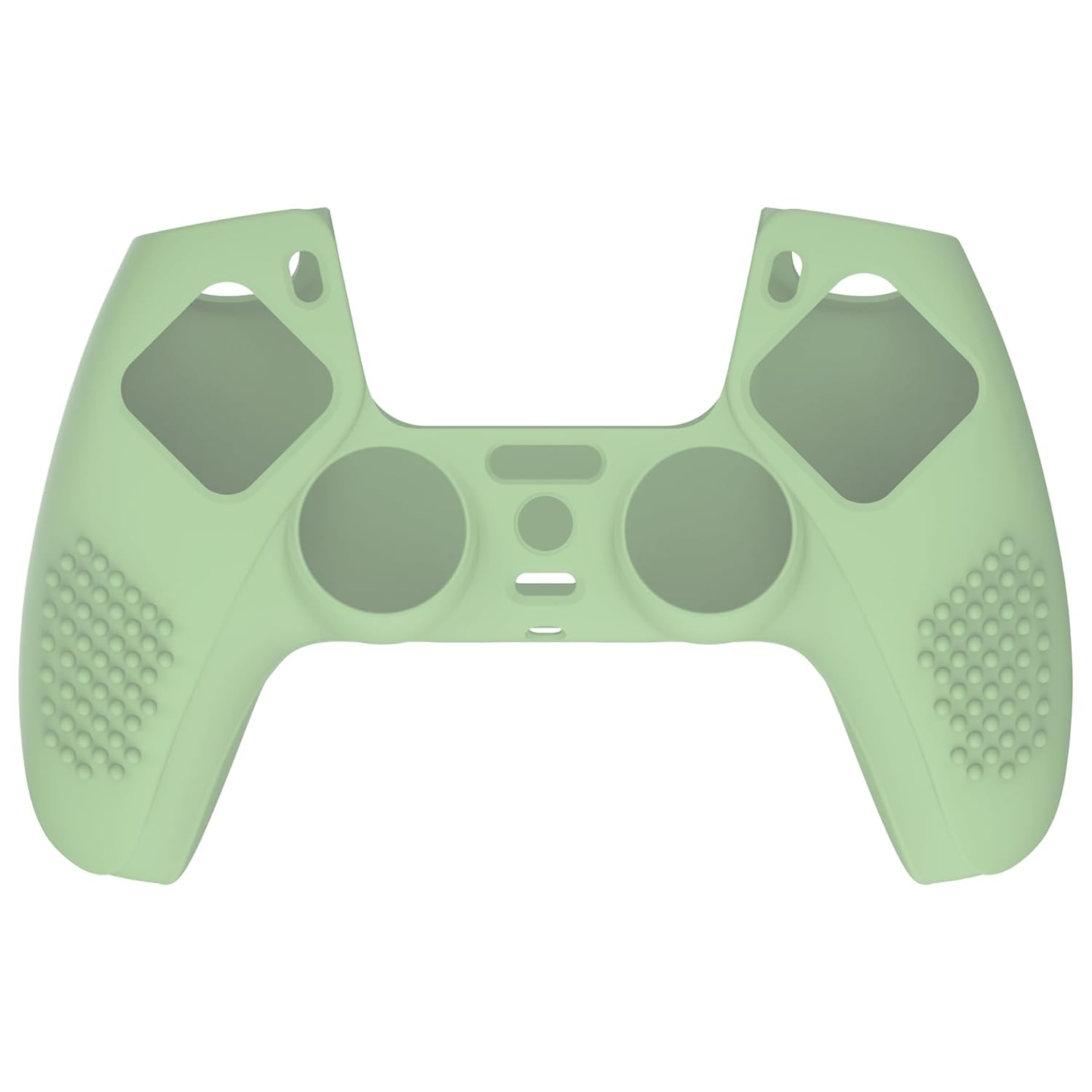
If you’ve ever put your PS5 DualSense controller down after a long session and noticed the glossy white plastic looking a little worse for wear — or slipping in sweaty palms during a tense boss fight — you’ve already felt the core problem this article solves. There are two main categories of product that address it: silicone grip covers (soft rubber sleeves that wrap around the entire controller body or just the grip zones) and vinyl decals (thin adhesive films, usually 0.1–0.2 mm thick, that stick directly to the surface and change its texture or appearance). Both protect your controller. Both change how it feels in your hand. But they do it through completely different mechanisms, cost different amounts, and make different sacrifices. We worked through material-science data, published accessory reviews, and aggregated owner feedback so you can walk away with a clear answer for your situation — not a vague “it depends.”
The Core Tradeoff in Plain Terms
Before we get granular: silicone covers and vinyl skins are not competing for the same use case. They look like they are — both live on the controller surface, both are sold as “grip solutions” — but their underlying value propositions are different enough that calling it a straight competition is slightly misleading.
Silicone covers add physical bulk and tactile compliance. The material compresses slightly under grip pressure, which is what makes it feel “grippy” — your hand deforms the surface just enough to create meaningful friction. This is the same principle behind the textured rubber on pro-tier joystick extensions and rubberized tool handles. The catch: silicone adds 2–4 mm to the controller’s profile in grip zones, changes button feel for players who rest thumbs on face buttons, and can accumulate particulate debris over time in the textured grooves.
Vinyl decals — precision-cut for DualSense geometry from brands like Dbrand or Skinit — add almost no bulk (sub-0.2 mm on most products), but they do change surface texture through finish engineering. A matte vinyl introduces micro-roughness at the surface level. A carbon fiber textured vinyl adds raised micro-channels that interrupt sweat’s ability to form a continuous film across the grip zone. The grip improvement is real but more modest than silicone. What vinyl does better is aesthetics, precision fit, and surface protection against scratches and the UV yellowing that plagues white DualSense plastic over time.
Grip Science: How Each Material Actually Works
Grip isn’t magic — it’s friction, and friction has a formula: it’s proportional to the coefficient of friction (µ, a unitless number) between two surfaces multiplied by the normal force pressing them together. When your palms sweat, a thin liquid layer forms between skin and surface, dramatically lowering that coefficient. Stock DualSense plastic — smooth ABS in the glossy zones — offers modest dry friction and very little wet friction, which is why it feels genuinely slippery once palms are damp.
How Silicone Creates Grip
Silicone rubber (polydimethylsiloxane and related compounds) has a notably higher dry coefficient of friction than smooth ABS plastic. Shore-hardness grades used in most controller covers fall in the Shore A 40–60 range — soft enough to deform under hand pressure but firm enough to hold its shape through extended sessions. More importantly, silicone’s micro-porous surface architecture retains meaningful friction even when wet, because the surface topology channels moisture away from the primary contact patch — the same principle as tire tread on a wet road. The grip advantage is both chemical (silicone’s molecular surface properties) and mechanical (the physical texture trapping and redirecting moisture).
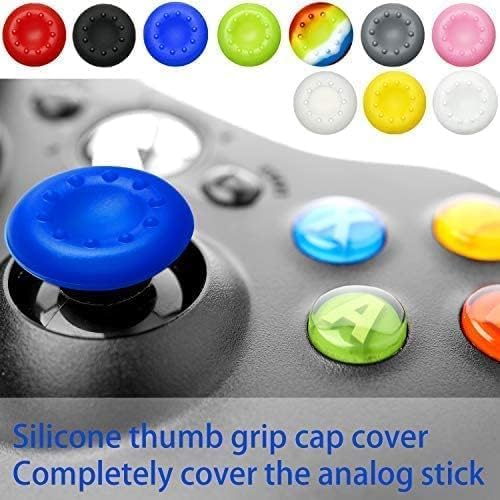
24-Pack
$8.88
In stock on Amazon
Check price on AmazonHow Textured Vinyl Creates Grip
A flat gloss vinyl offers almost no grip improvement over bare plastic — the surface is too uniform to interrupt sweat film formation. But textured finishes tell a different story. Matte, carbon fiber weave, and brushed aluminum pattern finishes introduce surface topology that breaks the continuous sweat film into discrete droplets, restoring partial contact between skin and film surface. PCMag’s coverage of DualSense controller accessories notes the carbon fiber texture variant as a meaningful tactile upgrade over stock, while gloss finishes are described primarily as aesthetic choices rather than grip solutions. CNET’s Best PS5 Accessories guide echoes this pattern: the texture finish is the functional variable, not the vinyl substrate itself.
 product image](/images/external/85daa1613860.jpg)
KontrolFreek PS4
$16.99
In stock on Amazon
Check price on AmazonHow the Two Compare Numerically
| Property | Silicone Cover | Textured Vinyl Decal |
|---|---|---|
| Typical thickness added | 2–4 mm at grip zones | 0.1–0.2 mm |
| Dry friction improvement over stock | High | Moderate (finish-dependent) |
| Wet/sweat resistance | Strong | Moderate (texture-dependent) |
| Retail price range (2026) | $10–$28 | $8–$40 |
| Reversibility | Fully removable anytime | Clean removal typical within 6–12 months |
| Hygiene maintenance | Periodic washing required | Wipes clean without removal |
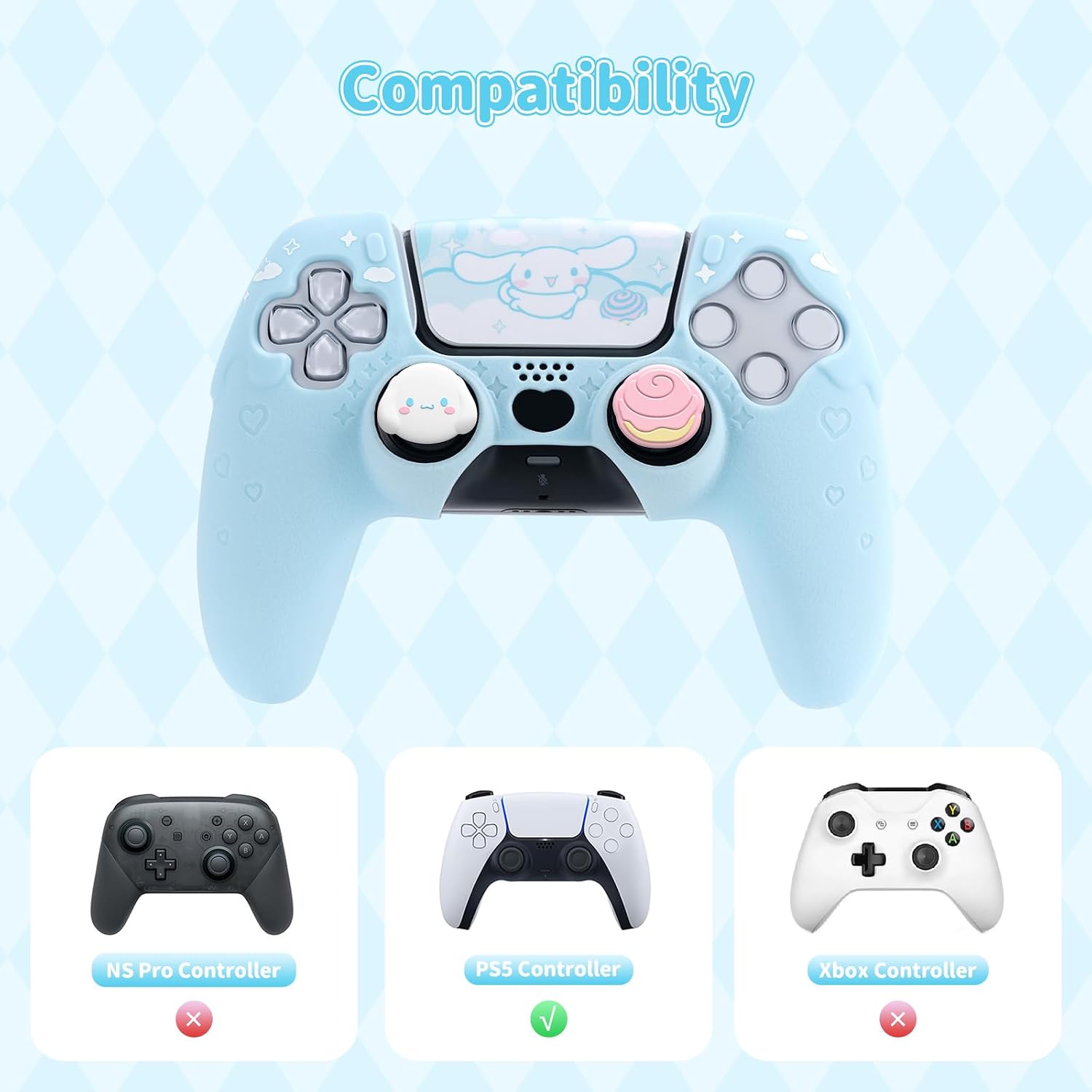
Kuitmor
$20.99
In stock on Amazon
Check price on AmazonSweat Resistance: The Long-Session Test
This is where the comparison gets decisive for a specific type of player: anyone who games in warm environments, experiences hyperhidrosis, or regularly plays through two-plus hour sessions without breaks.
Owner reports aggregated in Wirecutter’s PS5 accessories roundup and PCMag’s controller accessory guide show a consistent pattern: silicone covers substantially outperform vinyl in high-sweat, high-duration scenarios. Silicone’s inherent surface chemistry maintains friction even when the surface is moisture-saturated — a property that flat or lightly textured vinyl simply cannot match. Multiple long-session players referenced in Wirecutter’s PS5 accessories coverage note that their controller “never felt like it was going to slip” even deep into extended play, a result attributed specifically to silicone grip covers rather than stock plastic or vinyl alternatives.
Vinyl performs best in the first 30–60 minutes of a session, where moisture hasn’t yet formed a continuous film across the grip zones. Textured finishes extend this window, but owners consistently report that once palms are genuinely wet — not just warm, but actively perspiring — a vinyl-only solution begins to lose its advantage. The Verge’s DualSense accessory coverage describes texture wraps as an upgrade for “casual to moderate” sessions, with the explicit caveat that heavy sweaters or players gaming in summer heat without climate control will find silicone more reliable for sustained wet-grip performance.
The tradeoff on hygiene is real, though. Silicone’s micro-texture traps oils, dead skin cells, and fine debris. Without regular maintenance, silicone covers become visibly discolored and develop an unpleasant tackiness. Most owners report needing to remove and wash their covers every one to three weeks with regular use. Vinyl, by contrast, wipes clean easily with a dry or lightly damp microfiber cloth — no removal required, no soak cycle, no dry time.
Finish Feel and Aesthetic Precision
If you’re coordinating your DualSense with a wider device ecosystem — matching a laptop skin, an earbuds case wrap, or a specific colorway — silicone covers are a near-dead end. They come in limited colorways (typically matte black, dark blue, a handful of primaries), have soft rounded edges that blur clean design language, and cannot be printed with custom artwork at any meaningful resolution.
Vinyl wraps exist in an entirely different design universe. Boutique studios and platforms like Skinit offer custom-printed designs with photographic detail. Precision-laser-cut wraps engineered to the DualSense’s exact surface geometry include cutouts for every button, port, and seam — meaning no edge bleed, no bubbling from improper stretch, and a finish that reads as intentional rather than applied. PCMag’s DualSense wrap coverage specifically calls out precision-cut products as “notably cleaner than generic alternatives,” citing the clean seam alignment around the grip horns as a key differentiator.
Finish options that matter to a texture-aware buyer:
- Matte black or matte color: Reduces glare, hides fingerprints, adds moderate grip texture. The workhorse choice for most players.
- Carbon fiber weave: Raised texture channels, highest grip improvement in the vinyl category, slightly premium cost.
- Brushed aluminum: Primarily an aesthetic choice — smooth finish, low grip improvement, visually striking.
- Holographic or chrome: Purely decorative, grip-neutral, high fingerprint visibility.
For the collector or colorway-coordinator, vinyl is the only tool that delivers multi-device visual cohesion at this level of resolution. A silicone cover will make your controller look like a controller with a silicone cover on it. A well-applied precision vinyl wrap makes it look like the controller shipped that way.
Application, Removal, and Longevity
Silicone covers require essentially zero skill to apply — stretch and seat. Removal is equally trivial. Longevity is a function of material grade: quality silicone covers from established brands typically last 18–36 months before the silicone develops micro-tears or permanent compression set in the heaviest grip zones, based on owner longevity reports compiled in Wirecutter’s PS5 accessories roundup.
Vinyl application is a skill that intermediate buyers should be honest with themselves about. A DualSense is not a flat surface — it has compound curves, recessed channels, and tight-radius transitions around the grip horns. Precision-cut products include squeegee tools and step-by-step guides, and owner feedback suggests most intermediate users achieve bubble-free results within one or two attempts. Where it goes wrong is heat management: vinyl adhesive bonds to plastic more aggressively in warm conditions. CNET’s PS5 accessories coverage and Wirecutter’s general vinyl skin guidance both consistently recommend applying in a cool environment — ideally below 70°F / 21°C — with slow, deliberate squeegee strokes from center to edge.
Removal window matters practically. Most premium vinyl adhesives are engineered for clean removal within 6–12 months without surface damage. Extended adhesion — leaving a skin on for two or more years — increases the likelihood of adhesive residue on the controller body. This is not a vinyl-specific failure; it is a predictable property of pressure-sensitive adhesives on plastic substrates. If you’re applying a design you’ll want to preserve eventually, note your application date.
The Decision Rule: If X, Then Y
You’ve read the tradeoffs. Here’s the actual call:
If your primary problem is grip in long, sweaty sessions — especially if you play in warm environments or know you’re a heavy sweater — choose a quality silicone cover. The grip science is decisively on its side, it costs less, and it’s trivially easy to apply and remove. Accept the bulk, accept the limited aesthetics, and build a washing cadence into your routine.
If your primary problem is aesthetics, surface protection, or multi-device coordination — and your sessions are moderate-length in a climate-controlled environment — choose a precision-cut textured vinyl wrap, ideally matte or carbon fiber finish. You’ll get a meaningful grip upgrade over stock, a finish that protects against UV yellowing and micro-scratch accumulation, and a design you can actually be proud of.
If you’re a collector or colorway-coordinator who wants custom artwork or limited-edition visual treatments, vinyl is your only real option. Silicone does not exist in that design space.
If you want to hedge: some players run a silicone grip cover on the grip horns only — half-coverage options exist for exactly this purpose — while applying a full vinyl wrap to the face, touchpad, and body panels. You get the wet-grip protection where it matters most without compromising face-button feel or design visibility on the sections people actually see. Owners who report this layered setup consistently describe it as the best functional-aesthetic compromise, with acceptable tradeoffs on both sides.
The DualSense is an expensive piece of hardware worth protecting thoughtfully. Neither silicone nor vinyl is wrong — they are solving different problems. Know which problem you have, and the answer writes itself.