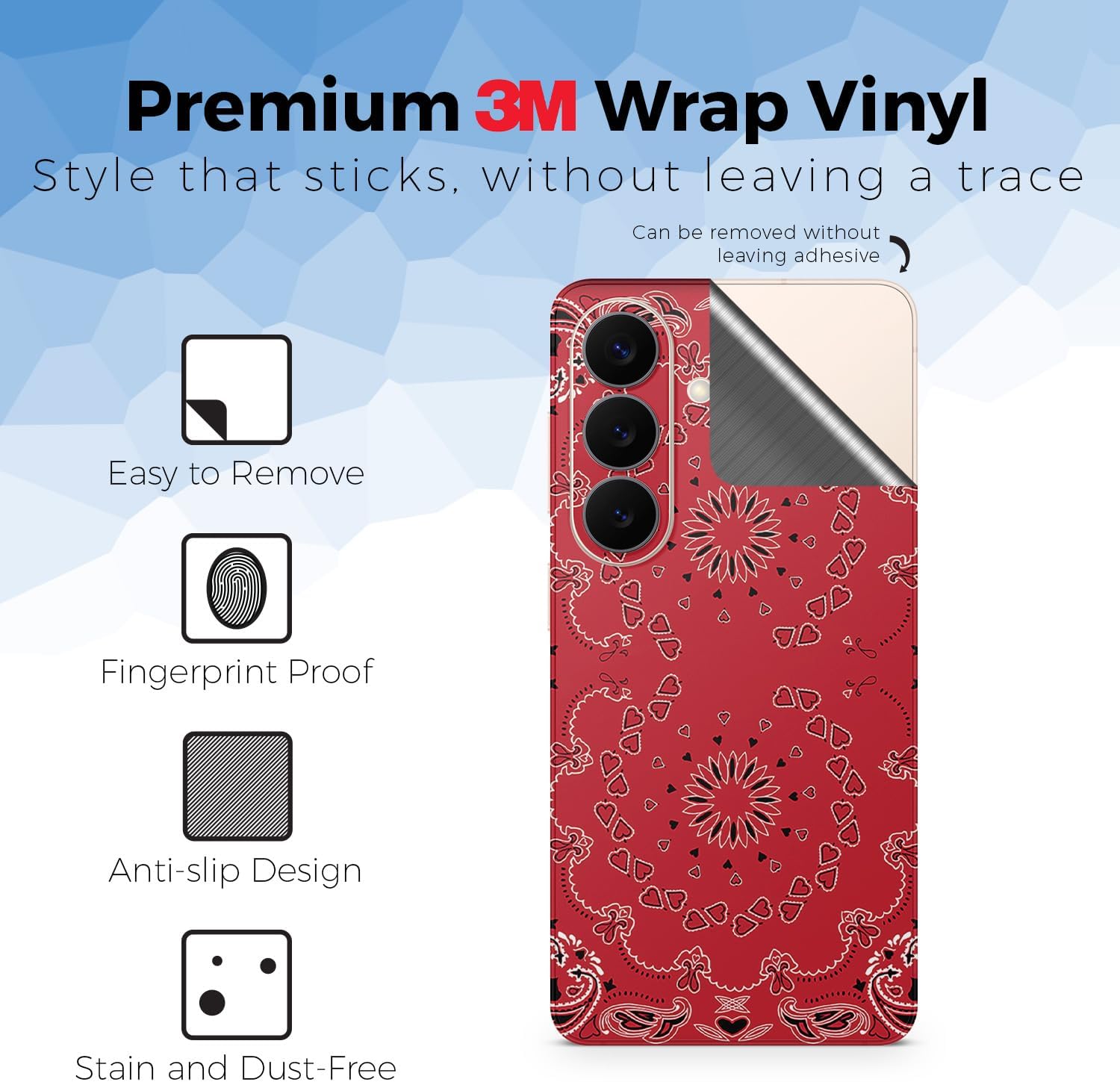
If you’ve ever peeled a thin, precisely cut vinyl sheet off a backing card and smoothed it onto your phone — or even just watched someone do it on a forum — you already understand what a skin wrap is at its core. A skin is a thin layer of adhesive vinyl, usually 0.1–0.3 mm thick, die-cut (meaning sliced by a computer-guided blade or laser) to fit the exact contours of a specific device model. It protects against scuffs and micro-scratches, dramatically changes the look and feel of your device, and removes cleanly without leaving sticky residue — unlike most cases, which add bulk. For the Samsung Galaxy S26, the skin market is already active as of May 2026, but it’s also a moment that rewards a little patience and some smart vetting. This guide is for buyers who’ve already skinned a device or two and want to move quickly on the S26 without getting burned by poor fit or mediocre materials. We dug through brand spec documentation, aggregated owner feedback, and published hardware coverage so you don’t have to start from scratch.
Why the S26’s Camera Module and Curved Frame Make Fit Accuracy Harder Than Usual
The Samsung Galaxy S26 continues the design language of the S25 Ultra lineage — specifically its pronounced rear camera array and the subtle curved edges where the glass back meets the aluminum frame. For skin buyers, these two features are where fit accuracy either shines or fails.
The camera cutout problem is the more forgiving of the two. A skin that’s 0.5 mm short on the camera island edge will leave a sliver of exposed glass, which looks sloppy and catches lint. A skin that overlaps the camera ring even slightly can create a raised lip that interferes with flat surfaces and, in edge cases, introduces lens flare from stray material near optical elements. The Verge’s Galaxy S26 hardware coverage notes the rear module is both wider and slightly taller than the S25 equivalent, which means templates cloned directly from last-generation cut files will misfit — a real risk in the first 60–90 days of a new model’s retail window when brands are still validating templates.
The curved-edge problem is subtler but arguably more consequential for longevity. Skins applied over a hard edge corner hold fine. Skins applied over a curved glass-to-frame transition have to conform to a compound curve — a surface that bends in two directions simultaneously. Vinyl that isn’t rated for adequate elongation (the spec that describes how far the material can stretch before tearing or developing stress-whitening) will lift at the corners within weeks, especially in heat or humidity. This is the technical divide that separates commodity skins from brands investing in material quality.
What to ask before buying:
- Has the brand published an S26-specific template, or are they shipping “S26 compatible” orders cut from a provisional file?
- What is the stated elongation rating of their vinyl stock?
- Does the backing include a precise camera island cutout, or is it one large rear-panel piece where you’re expected to trim?
Brands that can’t answer questions one and three clearly are worth deprioritizing right now.
MightySkins and the 3M Question: What the Spec Sheet Actually Tells You
MightySkins is one of the most widely distributed skin brands in the U.S. market, and they’re consistently among the first to list new Samsung models. For S26 buyers considering MightySkins specifically, the materials story matters more than the design catalog.
MightySkins markets their wraps as using 3M-backed vinyl. Here’s what that phrase actually means and where it gets complicated. Per 3M Graphics Division’s Vinyl Wrap Films application documentation, “3M-backed” can refer to several different product families — from the commercial-grade 1080 series used in automotive wraps down to thinner, lower-elongation films more appropriate for flat device panels. The 3M name is an indicator of supply-chain quality control, not a single universal specification. A skin described as “3M material” is still a meaningfully more consistent product than generic offshore vinyl — 3M’s quality standards for adhesive coat weight and release liner consistency are documented and auditable — but it doesn’t automatically mean the same stretch performance as the film your local car-wrap installer uses.
PCMag’s “Best Phone Cases and Skins” coverage has positioned MightySkins as a strong value option in the $8–$16 price range, noting that fit accuracy is generally reliable on flagship Samsung models once the brand has finalized templates — which historically takes 4–8 weeks post-launch. Owners in long-run community reviews frequently report that MightySkins holds well on flat rear panels but can show edge-lift on curved-back devices after 3–6 months, consistent with what you’d expect from a mid-weight vinyl that isn’t specifically rated for high-elongation conformability.
The honest tradeoff: MightySkins gives you a large design library, fast shipping, and a defensible price point. What you’re trading is the edge-conformability and premium texture depth you’d get from a brand like Dbrand, whose material specifications — per Dbrand’s own technical FAQ — specify a proprietary cast vinyl formulation engineered specifically for compound curves on flagship devices.
By the Numbers
| Brand Tier | Approximate Price (S26 rear + sides) | Material | Edge Conformability Rating |
|---|---|---|---|
| Budget (generic, AliExpress-adjacent) | $4–$9 | Unknown calendered vinyl | Low |
| MightySkins | $10–$16 | 3M-backed vinyl | Moderate |
| Dbrand / Skinit | $30–$55 | Proprietary cast vinyl | High |
| Boutique / custom | $80–$200+ | Cast vinyl, custom artwork | High (varies by studio) |
Carbon Fiber Skins on the S26: Texture Authenticity vs. Visual Mimicry
Carbon fiber finishes are the most-requested texture in the device skin market — Wired’s 2025 feature on phone skin culture noted carbon fiber as the dominant finish across both budget and premium tiers. For buyers evaluating S26 options, there’s a real spectrum worth understanding.
Printed carbon fiber is the most common type at the $10–$20 price point. A flat graphic printing a carbon weave pattern over standard matte vinyl. It photographs well, costs little, and has no tactile difference from any other matte skin. If the visual look is all you’re after, this is fine.
Textured carbon fiber vinyl — the type Dbrand calls their “Carbon Fiber” finish and that several boutique studios source from specialty vinyl suppliers — is a different product. The vinyl itself is embossed or woven to create a raised grid pattern you can feel under your fingertip. Per Dbrand’s material specification pages, their carbon fiber skin has a measurable surface texture that increases grip and adds a very slight rigidity to the wrap. Owners consistently report the tactile distinction from flat-print carbon as significant, and across aggregated reviews the pattern is clear: buyers who’ve handled both rarely go back to printed carbon.
Real CFRP (carbon fiber reinforced polymer) inlays exist in the ultra-premium device accessory space but are not practical for phone skins at scale — this is a material used in structural components, not adhesive wraps. If a listing claims “real carbon fiber skin,” read the spec sheet skeptically.
For the S26 specifically, the camera module’s geometry creates a challenge for carbon fiber texture skins: the embossed vinyl is slightly less conformable than a flat-surface equivalent, because the texture structure adds micro-rigidity. On a device with pronounced curves near the camera cutout, this means textured carbon fiber requires more careful heat-assisted application (using a heat gun or hair dryer to warm the vinyl before pressing it around curves) than a flat matte would. If you’re not comfortable with heat application, a printed carbon fiber skin is the lower-risk choice with nearly identical visual results from a distance.
Timing Your Purchase: The 60-Day Rule for New Models
This is the decision framework that changes depending on when you’re reading this article. As of May 2026, the S26 has been in consumers’ hands for roughly the standard post-announcement retail window. Here’s how to think about timing:
Buy now if: You’ve confirmed the brand has published an explicit S26 template (not an “S26 compatible” placeholder), the SKU ships immediately rather than on pre-order, and you’re willing to do a test-fit with patience for a possible reorder. MightySkins at their price point makes this math work — a $12 skin that turns out to have a 1mm camera-cutout misalignment is an annoyance, not a disaster.
Wait 30–45 days if: You’re buying a precision textured wrap from Dbrand or a comparable brand at $35–$55, where fit accuracy is a core part of what you’re paying for. These brands typically ship S26 templates only after physical device validation, and their community forums — while not something we can link directly — historically document when templates have been finalized.
Commission or boutique custom skins: If you’re in the $80–$200 tier commissioning custom artwork, communicate directly with the studio about whether they’ve received an S26 device for template validation. Any reputable studio at this price point should be able to answer that question clearly. If they’re working from a dimensional spec sheet rather than a physical device, ask whether they offer a recut guarantee if the first run misfits.
The Decision Frame
If you’re an intermediate buyer landing on this article with an S26 already in hand, here’s the if/then matrix that should route your decision:
If you want a wide design selection, sub-$16 spend, and you’re comfortable with occasional edge-lift over time → MightySkins is the practical call. Confirm the S26 template is live and shipping, not pre-order.
If textured carbon fiber is the priority and fit accuracy at the camera module matters to you → Dbrand’s carbon fiber or a comparable precision-cut brand is worth the $35–$50 spend. Budget the extra 2–3 weeks if their S26 template is still in validation.
If you’re coordinating across a full device ecosystem (phone + buds + watch + laptop) → Dbrand or Skinit both offer multi-device bundles with consistent finish families. The slight per-unit premium is worth it for colorway consistency across every surface.
If you’re commissioning a one-of-a-kind design → Don’t rush. A boutique studio working from a validated S26 template is worth a 3–6 week lead time. A miscut $150 skin is a worse outcome than a correctly cut one delivered in mid-June.
The S26 skin market will fully mature within 60–90 days. The buyers who move carefully in this window — vetting templates, confirming materials, matching their spend to their expectations — are the ones who’ll still be happy with the purchase in six months.